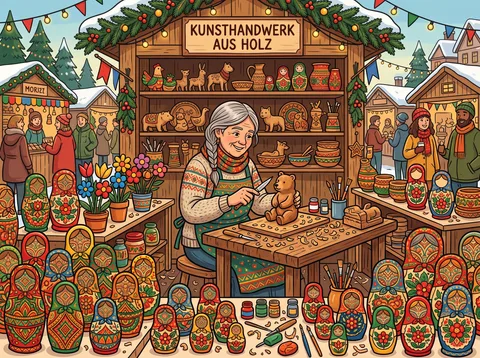
Woodcarver Shaping a Toy Bear
Under a fir-draped stall marked Kunsthandwerk aus Holz, a silver-haired woman in an embroidered sweater and apron sits carving a small wooden bear, knife in hand and curls of shaving scattered across her bench. Shelves behind her rise with painted animals, nesting dolls, jugs, and bowls in red, teal, and gold folk patterns, while jars of paint and a row of brushes wait within reach. Strings of fairy lights and berry garlands trim the wooden roof, and paper bunting flutters overhead against a pale winter sky. Rows of matryoshka dolls in floral dress crowd the counter in front of her, flanked by potted tulips. Beyond the stall, muffled in scarves and coats, market-goers drift past neighboring huts under snow-capped roofs. Every finished doll on that counter began the same way, one shape carved and painted until it was ready to nest inside the next.
24 · 48 · 108 · 192 · 391 pieces